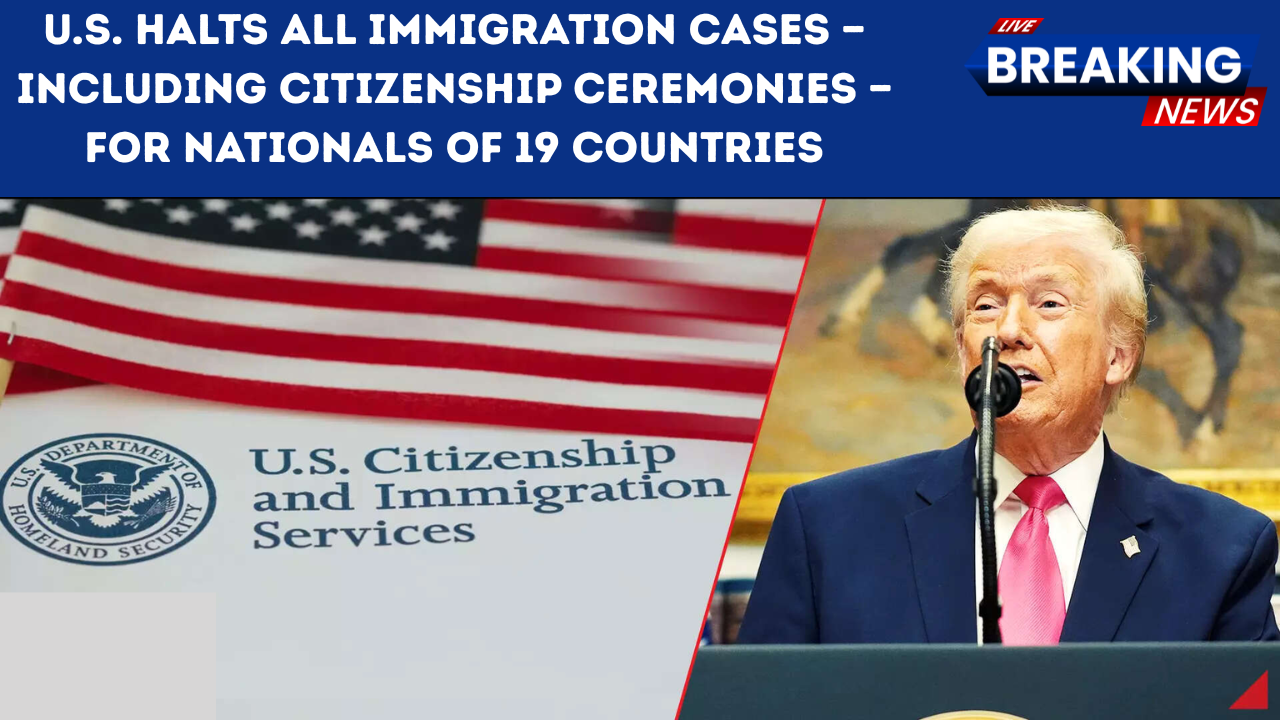
The U.S. government has ordered an immediate halt to all immigration cases – including green cards, asylum decisions and citizenship ceremonies – for nationals of 19 countries already subject to a presidential travel ban. This sweeping pause affects every stage of the immigration process and leaves tens of thousands of applicants in legal and personal limbo.
What the new halt actually does
Under internal guidance issued to U.S. Citizenship and Immigration Services (USCIS), officers have been told to stop making final decisions on any immigration case involving people from the 19 “countries of concern.” The instruction explicitly covers approvals, denials and the completion of naturalization oath ceremonies for lawful permanent residents who were about to become U.S. citizens.

The pause is open‑ended and will only be lifted when the USCIS director signs a new memo, meaning there is no fixed end date for affected applicants. The administration says the goal is to allow a “thorough re‑review” of pending and even previously approved benefits for possible national security or public safety concerns.
The 19 countries on the list
The 19 countries are the same group already targeted by a June 2025 proclamation that imposed full or partial U.S. travel restrictions. They are largely non‑European states in Africa, the Middle East and parts of Asia and the Caribbean, many facing conflict, instability or weak governance.

According to multiple reports, the affected countries are: Afghanistan, Myanmar (Burma), Chad, Republic of the Congo, Equatorial Guinea, Eritrea, Haiti, Iran, Libya, Somalia, Sudan, Yemen, Burundi, Cuba, Laos, Sierra Leone, Togo, Turkmenistan and Venezuela. Officials have signaled that the list could expand to around 30 countries after further security reviews.
Who is affected and how
This policy does not only hit people waiting overseas for visas; it also affects those already living in the United States. The hold covers all “form types,” which means family‑based green cards, employment petitions, student and work changes of status, humanitarian applications, asylum and naturalization are all frozen if the applicant is a national of one of the 19 countries.

Lawful permanent residents from these nations who have lived, worked and paid taxes in the U.S. for years are suddenly unable to complete their citizenship oaths, even when interviews and background checks were already finished. Lawyers also report clients showing up for long‑scheduled interviews only to be told their appointments are cancelled without any new date.
Key elements of the policy at a glance
| Policy element | What it does | Who is covered |
|---|---|---|
| Processing hold on pending cases | Stops final decisions on all immigration benefits, including approvals and denials, until further notice | Any applicant who is a citizen of or born in one of the 19 listed countries |
| Suspension of citizenship ceremonies | Cancels or postpones naturalization oaths even for applicants already approved for citizenship | Lawful permanent residents from the 19 countries awaiting oath ceremonies |
| Re‑review of approved benefits | Subjects already approved green cards and other benefits to security re‑screening and possible interviews | Nationals of the 19 countries whose cases were approved after January 20, 2021 |
| Pause on asylum adjudications | Freezes asylum decisions for all nationalities pending a comprehensive review | Asylum applicants nationwide, regardless of country of origin |
National security rationale and political context
The immediate trigger for the new measures was the shooting of two National Guard members in Washington, D.C., allegedly by an Afghan evacuee who received asylum in 2025 after entering during the Biden administration. In response, President Donald Trump ordered a set of rapid restrictions targeting immigrants from countries he and his advisers describe as high‑risk.

Homeland Security officials argue that the pause is necessary to ensure that “the best of the best” are allowed to become citizens and to reassess whether previous vetting under the prior administration was strict enough. At the same time, critics view the move as an unprecedented extension of the travel ban concept, turning a tool once focused on entry at the border into a broad weapon against legal immigration from entire regions.
Impact on families, communities and institutions
For affected families, the most immediate consequence is deep uncertainty. Couples cannot reunite, employers cannot finalize key hires, and long‑time residents lose the chance to vote or travel freely as U.S. citizens after planning their lives around expected ceremony dates.
Community organizations report surges in anxiety and confusion, especially among refugees and asylees who fear their protection could be revisited. Courts and immigration lawyers are preparing for legal challenges, arguing that freezing all cases from broad categories of people without individualized assessments violates equality and due‑process principles.
What happens next
The guidance states that any request to lift the hold, even in cases of litigation or emergencies, must receive personal approval from the USCIS director or deputy director. Within 90 days, the agency plans to create a prioritized list of cases for re‑review and may refer some individuals to immigration enforcement or other law‑enforcement agencies if new concerns arise.
SOURCE
FAQs
Q1. Does the halt apply to U.S. citizens sponsoring relatives from these countries?
Yes, family petitions can be filed, but final decisions on visas or green cards for relatives from the 19 countries are on hold.
Q2. Are people from other countries affected?
The broad pause on asylum decisions affects all nationalities, but the full case freeze is limited to nationals of the 19 listed countries.
Q3. Is there an official end date for this policy?
No, the pause is indefinite and will end only when USCIS leadership issues a new directive lifting or revising it.