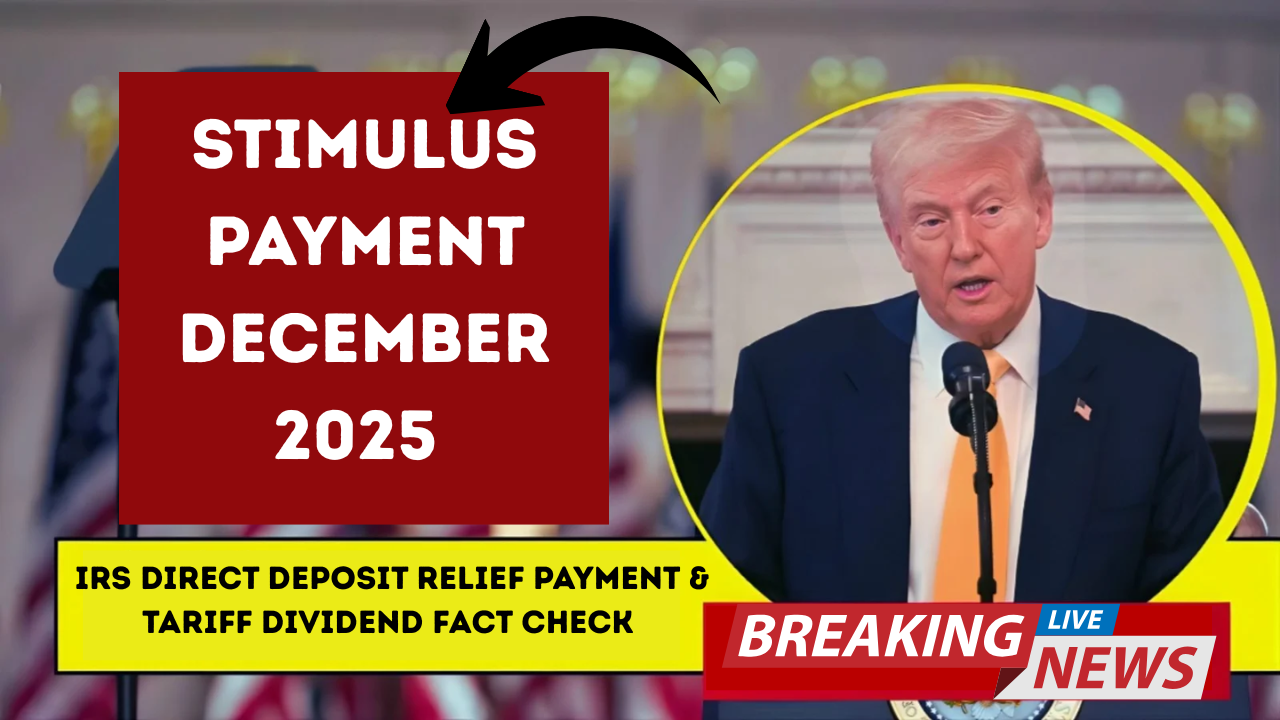
Stimulus rumors about December 2025 payments, “tariff dividend” checks, and last‑minute IRS direct deposits are misleading; there is no new, approved federal stimulus or tariff dividend payment scheduled for December 2025 as of now. Federal relief remains limited to previously authorized programs, and any future checks would require new legislation plus clear IRS and Treasury announcements.
What the IRS says about December 2025
The IRS has finished issuing the three rounds of pandemic‑era Economic Impact Payments, and its official guidance confirms that no new nationwide stimulus series is underway for 2025. Any genuine new payment program would appear in detail on IRS.gov and Treasury.gov, not only in social media posts or viral videos.

Recent coverage from national outlets emphasizes that Congress has not passed a new relief bill for late 2025, so the IRS has nothing new to distribute beyond normal tax refunds and ongoing credits. Reports also note that earlier “recovery rebate” clean‑up payments tied to 2021 tax returns were limited, time‑bound, and have now largely wrapped up.
December payments people actually may see
Although there is no new nationwide stimulus for December, some households will still notice deposits or checks because of routine benefit schedules. For example, many Supplemental Security Income (SSI) recipients receive two payments in December 2025 due to the January 1 holiday, but these are regular benefits, not stimulus checks or tariff dividends. Social Security retirement and disability payments also follow their usual Wednesday cycle based on birth dates.
Taxpayers who are owed 2024 or 2025 refunds may see direct deposits if their returns were processed late in the year, but that money comes from their own overpaid taxes or credits. The IRS is simultaneously moving toward phasing out most paper refund checks by the end of 2025, so a growing share of legitimate federal payments now arrive through direct deposit or other electronic methods.
Viral posts about IRS direct deposits
Social media posts and forwarded messages currently claim that “automatic” IRS direct deposits of 1,390 dollars, 2,000 dollars, or similar amounts will arrive in December 2025. Fact‑checkers report that there is no matching notice on IRS or Treasury websites and no federal law authorizing such one‑time payments this month. Many of these claims recycle old stimulus headlines, change dates, and add fake screenshots to appear current.

Some local and niche financial websites have also published conflicting stories suggesting that “IRS confirms” new checks on specific November or December dates. When compared with official IRS release pages, these claims do not align with any real news release or public guidance, which is why major outlets stress that expectations for a surprise December stimulus are unfounded.
Trump’s proposed 2,000 dollar tariff dividend
President Donald Trump has promoted an idea to send roughly 2,000 dollar “tariff dividend” checks to low‑ and middle‑income Americans, funded by revenue from tariffs on imported goods. In interviews and posts, he has framed this as a way to share tariff proceeds directly with households, while excluding high‑income earners from eligibility. The concept resembles stimulus checks in form but would rely on a different funding source.
However, Trump and his advisers have indicated that any such checks would not arrive before the 2025 holiday season and would instead be targeted sometime in 2026 if the plan moves forward. Budget analysts highlight that current and projected tariff revenue appears too small to cover universal 2,000 dollar payments without creating a large shortfall, especially when the federal debt is already in the tens of trillions.
Why the tariff dividend faces hurdles
Economists and tax policy experts point out that tariffs are paid by importers and can ultimately be passed on to consumers through higher prices, which means using them to fund checks might not feel like a “free” benefit. Estimates from independent analysts suggest that even optimistic tariff receipts would fall hundreds of billions of dollars short of the cost of giving every American 2,000 dollars, particularly if children were included. That gap would likely require borrowing, cutting other programs, or raising other taxes.
Legal experts also stress that only Congress can authorize federal spending, including any distribution of tariff revenue to households. Without a clear, enacted law, the White House cannot simply redirect tariff income into personal dividend checks, which is one key reason commentators currently describe the tariff dividend as a political proposal, not an approved policy.
Snapshot of key December 2025 payment facts
| Topic | Current status (December 2025) |
|---|---|
| New federal stimulus check | No new federal stimulus authorized for December 2025. |
| IRS December direct‑deposit relief | No special nationwide IRS relief deposits beyond normal refunds and benefits. |
| SSI December payments | Two SSI payments in December due to calendar timing, not new stimulus. |
| 2,000 dollar tariff dividend | Proposed concept; earliest discussed timing is 2026, not approved or scheduled. |
How to spot real IRS communications
Official IRS payments always connect to a law or clearly described program, and the agency does not begin relief campaigns solely through social media rumors. Genuine updates appear in IRS news releases, fact sheets, or pages linked from the main IRS.gov site, and they describe eligibility, timing, and payment methods in specific terms. Any claim that lacks a corresponding, detailed IRS or Treasury posting should be treated with caution.
The IRS also warns that it does not initiate contact by aggressive phone calls, threatening texts, or unsolicited emails demanding immediate action to “unlock” stimulus money. Taxpayers can verify whether a letter or payment is real by checking their secure IRS Online Account or comparing the document number to information on the agency’s website. When in doubt, contacting the IRS using the phone number listed on IRS.gov is safer than using numbers from unsolicited messages.
Practical steps for households
For now, households should plan December budgets without counting on an unexpected federal stimulus or tariff dividend payment. People who rely on SSI, Social Security, or other benefits can review their usual payment calendars to understand when deposits will arrive and avoid confusing standard benefits with new relief. Anyone who still believes they may have missed an earlier stimulus‑related credit should talk with a qualified tax professional about amending prior returns within allowed deadlines.
Staying informed through official federal websites and reputable news outlets reduces the risk of falling for viral payment rumors or scams. If a future Congress passes a new relief bill or formally adopts a tariff dividend program, that change will be widely covered and supported by detailed government guidance well before deposits appear in bank accounts.
SOURCE
FAQs
Q1: Is the IRS sending a new stimulus check in December 2025?
A: No, there is no new federal stimulus check scheduled for December 2025, and any claim otherwise is not supported by IRS or Treasury announcements.
Q2: Are the rumored 2,000 dollar tariff dividend checks real for this year?
A: The tariff dividend idea is a proposal for the future and has not been approved or funded for 2025, so no such checks are going out this December.
Q3: How can people verify if a payment notice from the IRS is legitimate?
A: People should cross‑check any notice with information on IRS.gov or their IRS Online Account and avoid responding to unsolicited calls, emails, or texts that pressure them about stimulus money.