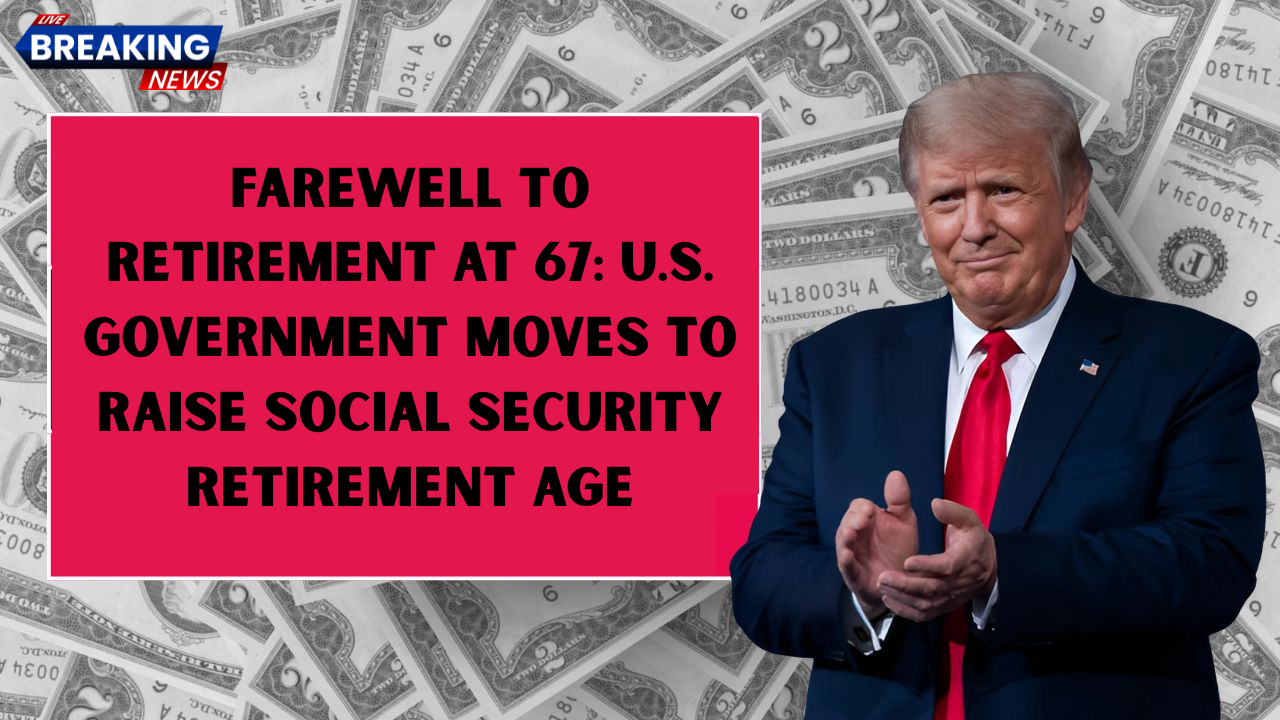
The phrase “farewell to retirement at 67” reflects two big shifts: the current phase‑in that has pushed the Social Security full retirement age (FRA) to 67 for many workers, and new political proposals that would raise it further, possibly toward 68 or 69 for younger generations.
While nothing beyond age 67 is yet law, the direction of debate means today’s younger workers may have to wait longer for full benefits or accept larger permanent cuts if they claim early.
What is changing with the retirement age now?
For people nearing retirement, the key change already locked in is that the full retirement age has finished moving up from 65 to 67 under reforms passed back in 1983.
Americans born in 1960 and later now face an FRA of 67, meaning they must wait until that age to receive 100 percent of their earned Social Security retirement benefit, instead of 65 as in earlier generations.

In 2025, this phase‑in reaches its practical end for many workers as those born in 1960 turn 65 but still need to wait two more years for full benefits.
Earlier birth years between 1955 and 1959 have slightly lower FRAs that increase in two‑month steps, but anyone 1960 or younger is now firmly in the “67” camp.
Proposals to push retirement beyond 67
Alongside the completed move to 67, some lawmakers are now openly backing plans to raise the retirement age again in the name of shoring up Social Security’s finances.
Several Republican policy blueprints and think‑tank proposals suggest gradually increasing the FRA to 68 or 69, or even as high as 70 over coming decades, with the changes applying mainly to younger workers who are far from retirement.

These ideas are driven by concerns that, without action, the main Social Security trust fund could face a shortfall in the early 2030s, forcing across‑the‑board benefit cuts if Congress does nothing.
Raising the full retirement age is one way to reduce long‑term costs, but it effectively cuts lifetime benefits for future retirees, especially for people in physically demanding or lower‑paid jobs who struggle to work longer.
How a higher FRA changes your benefit
Social Security gives you a wide claiming window: you can start as early as 62 or delay up to age 70, but everything is calculated relative to your FRA.
If the full retirement age goes up, claiming at the same calendar age becomes “earlier” in Social Security’s eyes and triggers a bigger permanent reduction.

Today, with an FRA of 67, claiming at 62 typically trims a standard benefit by about 30 percent compared with waiting until full retirement age.
Delaying beyond FRA adds delayed retirement credits—currently up to age 70—which can boost monthly checks by roughly a quarter compared with claiming right at FRA.
Example: What happens if the FRA rises?
| Scenario | FRA used by SSA | Claim age | Monthly benefit vs FRA |
|---|---|---|---|
| Current rules, FRA 67 | 67 | 62 | About 70% of full |
| Current rules, FRA 67 | 67 | 67 | 100% of full |
| Current rules, FRA 67 | 67 | 70 | About 124% of full |
| Hypothetical future, FRA 69 | 69 | 62 | Lower than 70% (bigger cut) |
| Hypothetical future, FRA 69 | 69 | 69 | 100% of full |
If Congress eventually raised the FRA to 69 but kept the same early‑claiming rules, someone still retiring at 62 would see a steeper haircut than today, because they would be filing seven years early instead of five.
That is why raising the FRA is often described as a benefit cut, even though the formula on paper still labels 100 percent of benefits at the new, higher age.
Who is most affected by a higher retirement age?
A higher retirement age lands hardest on people with shorter life expectancy, lower wages, or physically demanding work, who may not be able to keep working into their late 60s.
White‑collar professionals with higher incomes and longer expected lifespans are more likely to work longer or delay claiming, so they may be better able to offset an FRA increase.

Workers who need to claim early because of layoffs, caregiving, or health issues would feel particular pressure, because they face permanent reductions at precisely the time they have fewer options.
Meanwhile, people already at or near retirement when new rules take effect are usually protected or only lightly affected, with the largest shifts reserved for younger age groups.
What is not changing (yet)
Despite headlines, Congress has not passed a law that moves everyone’s FRA beyond 67 at this point.
The only firm changes on the books are the long‑planned increases that culminate with an FRA of 67 for those born in 1960 or later.
Any future move to 68, 69, or 70 would require new legislation and months or years of political negotiation, and would almost certainly be phased in gradually by birth year.
Other competing proposals would instead raise new revenue—for example by lifting the cap on earnings subject to Social Security tax—rather than pushing up the retirement age.
How you can prepare personally
Because the political outlook is uncertain, the safest approach is to build a retirement plan that does not rely on claiming as early as possible.
Checking your personalized Social Security statement, estimating benefits at different claiming ages, and saving more in workplace plans or IRAs all give you flexibility if rules change.
If you are already in your late 50s or early 60s, the odds are higher that your FRA will stay at the currently scheduled level.
Younger workers, however, should stay informed about reform debates, assume that official retirement ages might creep higher over their careers, and plan with a margin of safety.
SOURCE
FAQs
Q1: Has the retirement age officially gone above 67 yet?
No. The full retirement age is now 67 for people born in 1960 or later; any move beyond 67 is still only a proposal.
Q2: Can I still claim Social Security at 62?
Yes. The earliest claiming age remains 62, but claiming before your full retirement age permanently reduces your monthly benefit.
Q3: Who is likely to see the biggest impact if the age rises again?
Younger workers and people who need to claim early due to health or job issues would be most affected by a higher full retirement age.