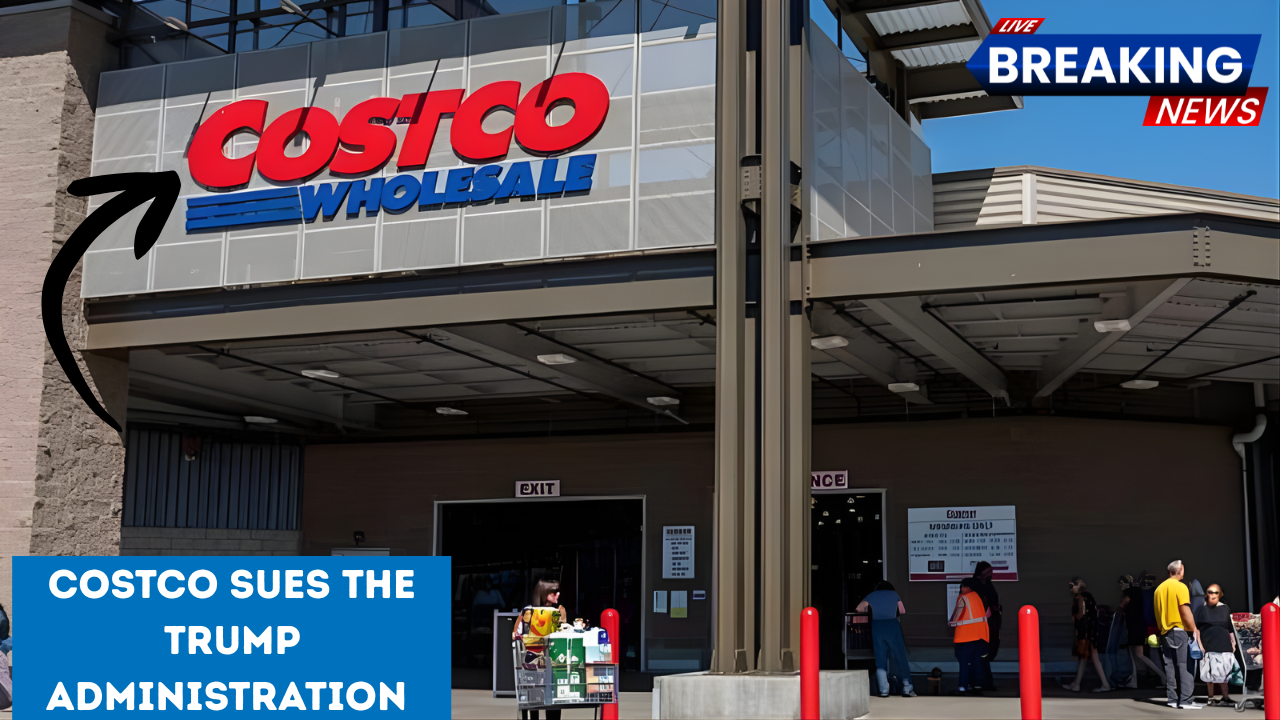
Costco’s lawsuit against the Trump administration centers on a simple demand: the retailer wants a full refund of the import tariffs it has paid this year and a court ruling that those tariffs were imposed without proper legal authority. The case places one of America’s largest warehouse chains at the heart of a wider corporate pushback against the way emergency powers have been used to reshape trade policy.
Why Costco Is Suing
Costco has filed its case in the U.S. Court of International Trade, arguing that President Donald Trump overstepped his authority when he used the International Emergency Economic Powers Act (IEEPA) to impose broad new tariffs. The company contends that under the U.S. Constitution and existing statutes, Congress, not the president, holds the core power to impose tariffs as a form of taxation on imports.

The lawsuit asks the court to declare the “emergency” tariffs unlawful and to ensure Costco is reimbursed if those duties are ultimately struck down. Costco says this separate action is necessary because even if the Supreme Court decides the tariffs were not authorized by IEEPA, importers are not automatically guaranteed refunds without their own judgments and specific court relief.
The Legal Argument Over Emergency Powers
At the heart of the case is a technical but highly consequential legal question: does IEEPA allow a president to impose tariffs, or only to regulate and restrict trade in narrower ways during a national emergency. Costco’s complaint emphasizes that the statute was never explicitly written to authorize import duties and that using it to levy broad tariffs stretches emergency powers beyond what Congress intended.

Federal courts have already signaled skepticism about this use of IEEPA. Two lower courts ruled that Trump’s earlier emergency-based tariff actions went beyond what the law permits, though they allowed the duties to remain in force while appeals move forward. The Supreme Court has now taken up a key test case on these tariffs, and Costco’s suit is designed to protect its financial position depending on how that landmark ruling comes out.
Financial Stakes For Costco And Importers
Costco has not publicly disclosed the exact amount of tariffs it has paid under the challenged measures, but government data shows the scale of the issue. U.S. Customs and Border Protection estimates that importers in total have paid close to 90 billion dollars in IEEPA-related duties through late September, a pool of money that could be partly or fully refunded if the courts ultimately reject the tariffs.

Beyond the headline sums, Costco stresses the practical risk created by customs procedures. Once tariff entries are “liquidated” — the formal process of finalizing and locking in the amount owed — it becomes significantly harder or even impossible to challenge and reclaim those duties, which is why the company is acting before a December 15 deadline that it says could undermine its refund rights.
Key Details Of Costco’s Tariff Burden
The precise breakdown of Costco’s tariff exposure is not fully public, but available filings and official data help illustrate the picture for the company and the broader business community.
| Item | Detail |
|---|---|
| Law used to impose tariffs | International Emergency Economic Powers Act (IEEPA) |
| Court where Costco filed its lawsuit | U.S. Court of International Trade, New York |
| Timing of Costco’s filing | Lawsuit lodged in late November, ahead of a December 15 deadline |
| Total IEEPA duties paid by all importers | Almost 90 billion dollars through late September |
| Relief Costco is seeking | Full refund of all IEEPA tariffs paid this year, plus protection from further collection while litigation continues |
| Link to pending Supreme Court case | Costco wants refunds if the justices confirm that Trump lacked authority for the tariffs |
Implications For U.S. Trade Policy
Costco is not alone in challenging the administration’s emergency tariffs, but it is one of the largest and most visible companies to take this route, joining a broader queue of firms that have filed similar refund suits. Together, these cases could reshape how far presidents can go in using national emergency declarations to unilaterally rewrite trade rules, especially when those actions have tax-like effects on businesses and consumers.
If the Supreme Court and the trade court ultimately agree with Costco’s interpretation, the decision could force the government to unwind a sizeable chunk of the recent tariff regime. That outcome would not only trigger major refunds but could restrict future administrations’ ability to turn to emergency laws as a shortcut around Congress for trade measures.
How The Trump Administration Is Responding
The Trump administration maintains that the tariffs are lawful and that IEEPA clearly allows the president to take strong action when national and economic security are at stake. White House officials argue that rolling back these duties would weaken the United States’ negotiating leverage and undermine a central pillar of the president’s trade strategy.
Administration lawyers have urged the Supreme Court to uphold the tariffs and have pushed back on the idea that companies like Costco should receive refunds, framing the duties as a necessary tool to address what they describe as unfair foreign trade practices. They also warn that granting large retroactive refunds could have serious budgetary and policy consequences for the federal government.
What It Means For Consumers And Businesses
For Costco, the outcome will influence how much it ultimately pays to bring imported goods into its warehouses, which in turn shapes pricing decisions for members. Higher tariffs tend to raise costs across the supply chain, and while retailers can absorb some of that burden, a portion often flows through to shoppers in the form of higher prices or narrower product offerings.
Other companies are watching closely because a favorable ruling for Costco on both legality and refunds could set a powerful precedent. It would encourage more firms to pursue their own refund claims and could tilt the broader policy debate away from aggressive, unilateral tariff strategies toward more negotiated or legislated trade remedies.
SOURCE
FAQs
Q1: Why did Costco sue instead of waiting for the Supreme Court decision
Costco argues that without its own case and judgment, it is not guaranteed a refund even if the Supreme Court rules the tariffs illegal.
Q2: Does this lawsuit mean tariffs are already illegal
No, the tariffs remain in place while the courts decide, and the Supreme Court has not yet issued a final ruling on the underlying legality.
Q3: Could Costco’s lawsuit lower prices for shoppers
If Costco wins refunds and future tariffs are blocked, its import costs could fall, which may ease pressure on prices, though the exact impact on any individual product is uncertain.