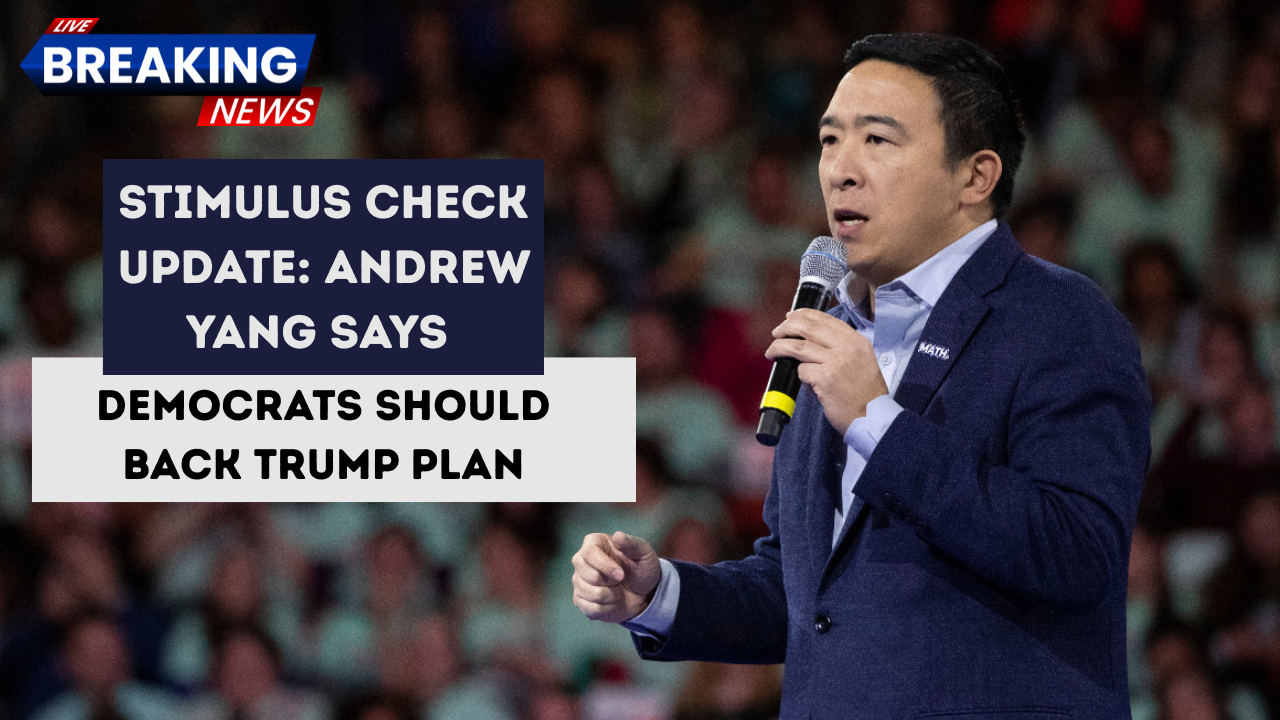
Andrew Yang’s latest comments urging Democrats to support President Donald Trump’s new stimulus-style “tariff dividend” proposal have reignited debate over direct cash payments to Americans. This development blends Yang’s long-standing advocacy for universal basic income with Trump’s renewed focus on affordability and household relief.
What Yang Is Supporting
Andrew Yang has publicly backed Trump’s plan to send direct payments to American households funded in part by tariff revenues and potential tax changes. In a recent television interview, he argued that Democrats “should be on board” with any policy that boosts the spending power of working- and middle-class families, regardless of which party proposes it. Yang framed the concept as consistent with his broader push for regular cash transfers that strengthen local economies by increasing everyday consumer demand.

Inside Trump’s Tariff Dividend Proposal
Trump has proposed issuing “tariff dividend” checks of about 2,000 dollars per person, targeting moderate- and middle‑income Americans. He has suggested a timeline around mid‑2026 for payments and has floated using revenue from import tariffs alongside options like eliminating some taxes on tips, overtime, or Social Security income. The White House has also linked the broader affordability agenda to plans for a new prescription‑drug website that would let consumers buy medicines directly, aiming to cut out some insurance middlemen.
Key Numbers At A Glance
Below is a snapshot of core details that shape the current debate over Yang’s endorsement and Trump’s plan.

| Item | Detail |
|---|---|
| Proposed check amount | About 2,000 dollars per eligible person |
| Target group | Moderate- and middle‑income households |
| Earliest estimated timing | Around mid‑2026 for first payments |
| Primary funding idea | Revenue from new and existing tariffs on imports |
| Yang’s political status | Former Democrat, now registered independent |
| Yang’s core policy legacy | Universal basic income/Freedom Dividend advocacy |
Why Yang’s Support Matters Politically
Yang’s endorsement carries symbolic weight because he previously ran for president in the Democratic primaries before leaving the party to become an independent in 2021. By urging Democrats to “get onboard,” he is challenging his former party to prioritize material gains for workers over partisan rivalry at a moment when inflation, housing costs, and medical bills remain top voter concerns. His comments also highlight a growing bloc of voters who are less loyal to party labels and more interested in concrete economic benefits like cash payments and cheaper essentials.
Economic Rationale Behind Cash Payments
Yang argues that giving people money directly is one of the most efficient ways to support the real economy because families immediately spend it on necessities such as rent, groceries, and services. This spending circulates through local businesses, supporting jobs and, in his view, making capitalism “work better” when households have disposable income. Supporters of direct payments point to the pandemic‑era stimulus checks, which helped reduce poverty and kept consumer demand from collapsing during a historic shock.
Challenges And Criticism Of The Plan
Despite the political appeal of 2,000‑dollar checks, Trump’s proposal faces serious legal, budgetary, and legislative hurdles. Budget analysts warn that using tariff revenue this way could widen federal deficits by hundreds of billions of dollars, and some Republican lawmakers have argued that extra funds from tariffs should be used to pay down debt rather than finance new spending. There are also open questions about whether the administration has authority to redirect tariff proceeds into direct payments without explicit approval from Congress, especially with a pending Supreme Court case on the limits of presidential tariff powers.
What This Means For Democrats
For Democrats, Yang’s comments pose a strategic and ideological dilemma heading into future elections. If they oppose the plan outright, Republicans are likely to portray them as obstructing immediate financial relief for working families; if they support it, they risk helping Trump deliver a popular policy victory that could strengthen his political standing. The debate will likely push Democrats to sharpen their own proposals on affordability, whether through expanded tax credits, targeted subsidies, or alternative versions of recurring cash payments that differ from Trump’s tariff‑funded approach.
Outlook For Future Stimulus‑Style Checks
The path from announcement to actual checks is uncertain, and many details remain unresolved. Even with Yang’s high‑profile support, any stimulus‑style program tied to tariffs will need to clear Congress, survive legal scrutiny, and navigate concerns about inflation and deficits before money reaches households. Still, the fact that a prominent universal basic income advocate is aligning, at least on this issue, with a Republican president underscores how direct cash relief has become a bipartisan political tool that neither party can easily ignore.
SOURCE
FAQs
Q1: Is Trump’s 2,000‑dollar tariff dividend officially approved?
A1: No, it is a proposal that still needs congressional approval and may face legal and budget constraints.
Q2: Why does Andrew Yang support this plan?
A2: He believes any policy that increases the spending power of working families and feeds money into local economies is a “huge win,” regardless of party.
Q3: When could Americans realistically see such checks?
A3: Trump has mentioned a target around mid‑2026, but that timeline depends on legislative action and legal clearance.