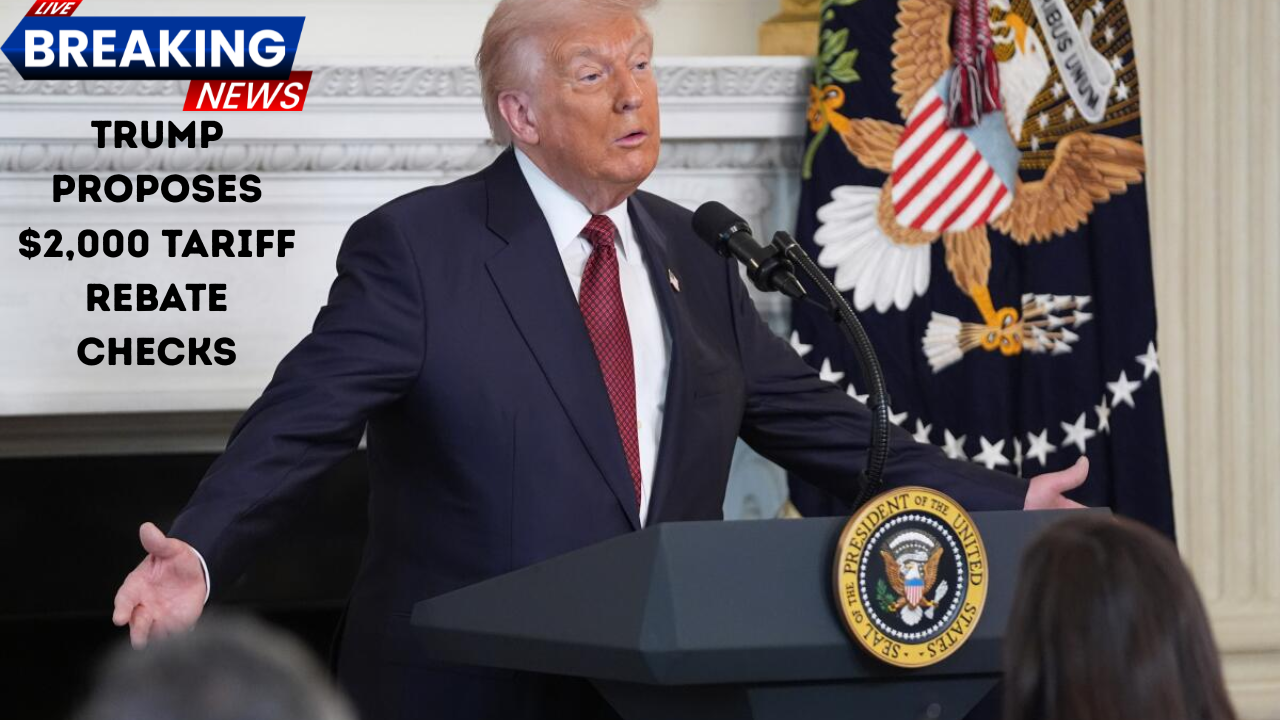
Trump’s proposal for $2,000 tariff rebate checks is a political promise, not an approved benefit program, and no one is receiving these payments yet. The idea is to use money collected from tariffs on imported goods to send one‑time “dividend” checks to many low‑ and middle‑income Americans, possibly sometime in 2026 if Congress agrees.
What Is The $2,000 Tariff Rebate?
President Donald Trump has floated the idea of sending most Americans a $2,000 “tariff dividend” or rebate check funded by federal revenue from new and higher tariffs on imports. He has described it as a way to show that his trade policies benefit ordinary households, turning tariff collections into a visible cash payout rather than leaving the money in the federal budget.

In public comments and social media posts, Trump has framed the proposal as a broad payment “for everyone” except high‑income households, similar in spirit to previous stimulus checks but tied specifically to tariff revenue. However, his administration has not released a detailed written plan that explains the exact rules, mechanics, or timeline for these payments.
Who Might Be Eligible?
So far, officials have only offered hints about eligibility, suggesting that the checks would be targeted to low‑ and middle‑income households. The Treasury Secretary has indicated that families earning around $100,000 a year or less are the most likely focus, with higher‑income households excluded entirely.

Trump has also referred to helping “individuals of moderate income,” which lines up with comments that the payments would go to people who “need financial assistance” rather than all taxpayers. Because no law has been passed, these income thresholds remain speculative and could change if Congress ever takes up the idea.
How Would The Rebate Be Funded?
The proposed checks would be funded from federal tariff revenue, which has risen as Trump expanded and increased duties on imports from countries such as China and the European Union. The administration has promoted these collections as a new stream of money that can be redirected to households instead of just reducing the deficit.

However, experts note a major math problem: total tariff revenue to date, while over $100 billion, is far below the $300 billion‑plus that would be needed to send $2,000 to every eligible adult. Analysts warn that unless eligibility is tightly limited or the benefit delivered partly as tax relief instead of cash, the plan would strain the federal budget or add significantly to the national debt.
Status: Proposal, Not Law
Right now, the tariff rebate checks are only a proposal and talking point, not a signed‑into‑law benefit. For Americans to actually receive money, Congress would need to pass legislation authorizing the Treasury to issue payments, similar to how previous stimulus checks were approved.
Some lawmakers have experimented with the idea, such as a bill backed by Senator Josh Hawley that would use tariff revenue to send payments between about $600 and $2,400 to families, but this legislation has not passed either chamber. With concerns about cost, inflation, and deficits, many members of Congress in both parties remain skeptical that a large‑scale $2,000 program will move forward quickly.
Possible Timeline And Delivery
Trump and his aides have suggested that any tariff rebate checks would likely arrive sometime in 2026, potentially before the next midterm elections. That timing depends on two big uncertainties: continued high tariff revenue and Congress actually approving a rebate or tax credit program.
If authorized, the most likely delivery method would be through the IRS, using the tax system much like the pandemic‑era stimulus payments. Payments could arrive as direct deposits for people with bank information on file, paper checks for others, or potentially as refundable tax credits that boost refunds when filing returns.

Key Numbers At A Glance
Here is a simplified snapshot of the proposal and the funding challenge based on current public estimates.
| Item | Approximate Amount / Status |
|---|---|
| Proposed individual rebate | $2,000 per eligible person |
| Likely income cap (early talk) | Around $100,000 household income |
| Tariff revenue to date | Just over $100 billion |
| Rough funding needed for broad $2,000 checks | $300 billion or more |
| Current legal status | Proposal only, no law passed |
| Earliest realistic delivery window | Mid‑to‑late 2026, if approved |
Figures and timing are rough estimates drawn from public reporting and may change with new data or legislation.
Pros, Cons, And Open Questions
Supporters argue that a $2,000 tariff rebate would put meaningful cash in the hands of millions of families facing high living costs, while also making tariffs more popular by sharing the proceeds directly. They also claim that the policy could offer targeted relief to lower‑ and middle‑income households without permanently expanding other federal programs.
Critics counter that tariffs are effectively a tax that businesses and consumers pay through higher prices, so “rebate checks” may simply return money that households already lost at the checkout line. They also point out that funding gaps, legal challenges to Trump’s use of emergency tariff powers, and the need for congressional approval make a full $2,000 payment to most Americans unlikely.
What You Should Do Now
Because there is no enacted law, people should be wary of scams that promise to “sign you up” for Trump’s $2,000 tariff checks in exchange for fees or personal information. The IRS does not charge money to apply for federal payments, and any real program would be announced through official government channels and reputable news outlets.
For now, the most practical step is to stay informed, keep your tax information up to date, and understand that this proposal could change shape—possibly becoming a smaller payment, a limited‑eligibility benefit, or a tax credit instead of a direct check.
SOURCE
FAQs
Q1: Are $2,000 tariff rebate checks guaranteed?
A: No. They are only a proposal at this stage and require Congress to pass authorizing legislation.
Q2: When could people realistically get the money?
A: Officials have mentioned 2026 as a target, but no date is set and nothing can be paid out until a law is approved.
Q3: Will everyone receive $2,000?
A: Probably not. Early comments suggest income limits around $100,000 and other targeting that could exclude many higher‑earning households.