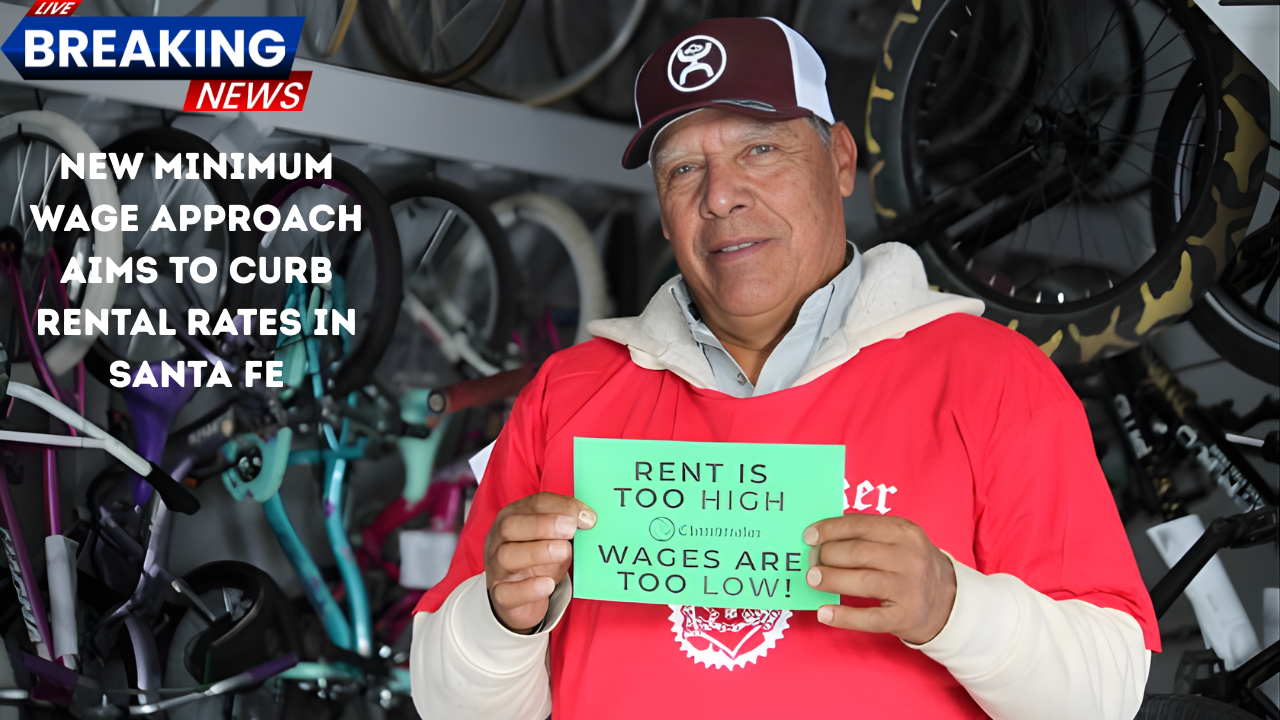
Santa Fe is testing a new way to tackle soaring rents by directly linking its minimum wage to local housing costs, a first-of-its-kind policy in the United States. City leaders hope that as rents climb, workers’ paychecks will rise fast enough to keep more residents housed in the communities where they work.
Why Santa Fe Needed a New Approach
Over the past decade, Santa Fe’s charm and popularity have pushed housing costs far beyond what many local workers can afford. Rents have risen far faster than typical wages, leaving about one‑third of households paying an outsized share of their income just to keep a roof overhead.

This imbalance has begun to push lower‑ and middle‑income residents, including many service workers and long‑time locals, to cheaper communities outside the city. City officials warn that without intervention, Santa Fe risks losing the diversity and workforce that sustain its tourism, arts, and service economy.
How the New Minimum Wage Formula Works
Under the new ordinance, Santa Fe’s minimum (or “living”) wage is scheduled to increase from 15 dollars per hour to 17.50 dollars by 2027, with future raises tied to both consumer prices and rent levels. Historically, annual adjustments were linked only to the Consumer Price Index, but now fair market rent data will count for half of the formula.

The city also built in guardrails: annual increases are capped at 5 percent, and the wage will never be cut, even if prices or rents temporarily fall. City analysts estimate that roughly 9,000 workers, or about one‑fifth of the local workforce, will see a direct pay increase once the new rate takes effect.
Key Numbers Behind the Policy
The ordinance grows out of years of rising housing costs and a widening gap between rent and income. The table below highlights some of the core figures driving the new wage approach.

| Indicator | Recent Figure | Source Insight |
|---|---|---|
| Current living wage (2025) | 15.00 dollars per hour | City’s existing living wage as of 2025 |
| Target wage by 2027 | 17.50 dollars per hour | New ordinance phase‑in level |
| Rent increase since 2016 | About 74% | Far faster than local income growth |
| Home price increase since 2016 | About 80% | Deepening ownership affordability gap |
| Median income growth since 2016 | About 36% | Lagging far behind housing costs |
| Share of rent‑burdened households | Roughly one‑third | Spending a large share of income on rent |
| Workers gaining from new wage | About 9,000 (≈20% of workforce) | Directly affected when ordinance starts |
These numbers show why city officials see wages as a necessary part of the housing solution, alongside more construction and subsidies.
Link Between Wages and Rents
By tying annual wage updates to both inflation and fair market rents, Santa Fe is trying to ensure that paychecks better reflect real local living costs. The basic idea is simple: when rent goes up, the minimum wage should also rise so workers do not fall further behind.
Santa Fe is the first U.S. city to embed this rent link directly into its wage formula, which is why the policy is drawing national attention. Supporters say the approach offers a more realistic standard than traditional minimum wages that ignore housing, typically the largest expense for low‑wage workers.
Supporters, Critics, and Small Businesses
Labor advocates and many renters see the ordinance as a long‑overdue boost that could help families stay in the city they serve. Mayor Alan Webber has framed the measure as a way to keep Santa Fe’s cultural and economic fabric intact by allowing people who work in the city to keep living there.

Some business owners, especially small “mom‑and‑pop” shops, worry that higher wages tied to rents could strain thin profit margins. City leaders describe the process of designing the ordinance as “threading a needle,” aiming to balance worker needs without overwhelming local employers, which is one reason for the 5 percent cap.
Housing Supply, Mansion Tax, and Other Tools
Officials acknowledge that raising wages alone cannot fix an underlying shortage of housing that keeps prices high. Santa Fe has also accelerated permits for new apartments and housing projects, and recent data show rent growth slowing to around 0.5 percent in the past year as more units come on line.
The city is pairing the wage reform with a “mansion tax” on home sales above 1 million dollars, directing that revenue into an affordable housing trust fund. Together, these tools are meant to expand supply, protect vulnerable renters, and make sure paychecks stretch further in a very expensive market.
What This Could Mean Beyond Santa Fe
Nationally, many cities are wrestling with similar pressures: fast‑rising rents, limited housing, and wages that do not keep pace with local costs. Analysts are watching Santa Fe closely to see whether linking minimum wage growth to rents reduces displacement without triggering major job losses or business closures.
If the experiment succeeds, other high‑cost cities may feel pressure to adopt similar formulas or at least consider housing‑linked wage standards as part of broader affordability strategies. For now, Santa Fe’s approach is a live test of whether wage policy can be used as a direct lever against runaway rents.
SOURCE
FAQs
Q1. When will the 17.50 dollar wage take effect?
The higher rate is scheduled to be fully in place by 2027, after a phase‑in from the current 15 dollar level.
Q2. Will the minimum wage ever go down if rents fall?
No, the ordinance keeps the wage from being reduced even if consumer prices or rents decline.
Q3. Does this policy solve the housing crisis on its own?
No, city officials see it as one tool alongside more housing construction, subsidies, and the mansion tax to improve overall affordability.