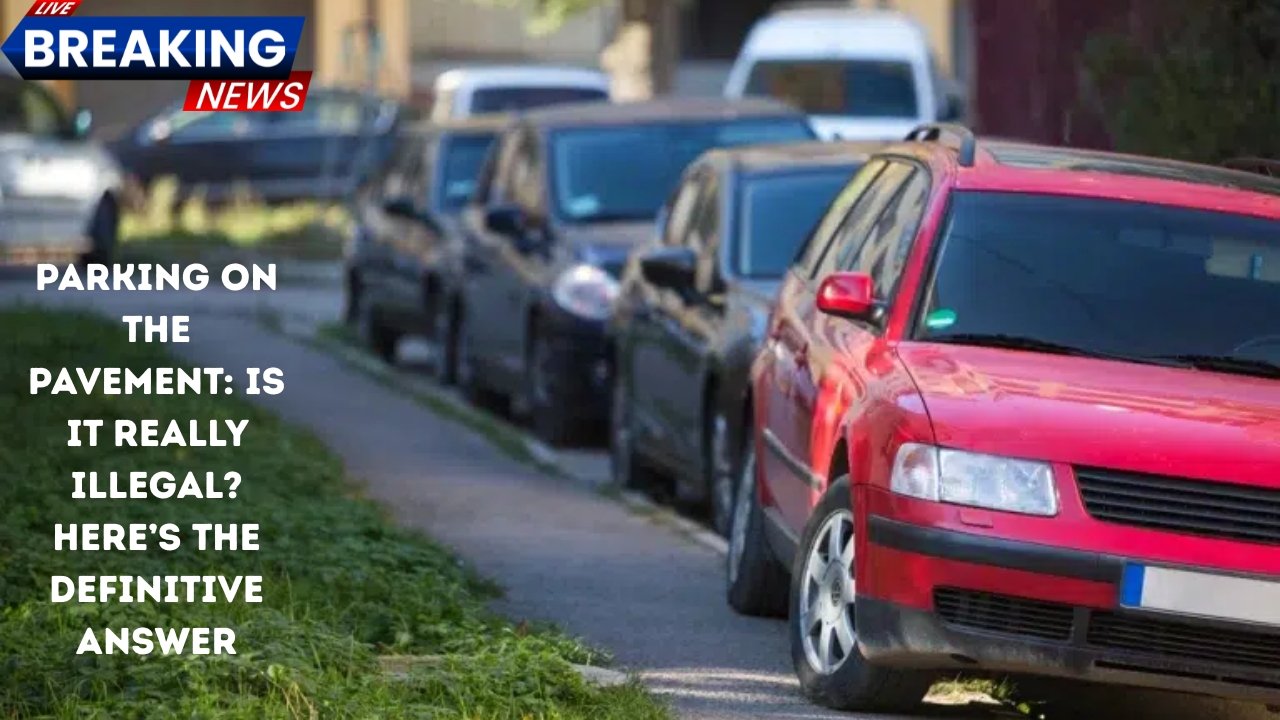
Parking on the pavement is often illegal or tightly restricted because it obstructs pedestrians and can create serious safety risks, but the exact rules depend heavily on where you live. In some places there is a blanket ban, while in others it is allowed only if local signs or regulations say so, and drivers can still be fined if they cause an obstruction.
What “parking on the pavement” really means
Parking on the pavement generally covers any situation where one or more wheels of a vehicle are on the footpath, verge or sidewalk rather than entirely on the carriageway. This can include stopping partly on the kerb to “create space” on narrow roads, even if the driver believes they are helping other motorists.

In practice, many traffic codes treat pavements as spaces reserved for pedestrians and people using mobility aids, so using them for parking is usually viewed as an obstruction. This is why local governments and police forces can issue fines, remove vehicles or take other enforcement action if a parked vehicle blocks safe passage.
How the law works in the UK
In the UK, the rules are strict in some nations and more patchy in others, which causes confusion for many drivers. In London, parking on the pavement has been prohibited since the 1970s, and the Highway Code says drivers must not park partially or wholly on the pavement in the capital.

Scotland has now introduced a nationwide ban on pavement parking, double parking and parking at dropped kerbs, with local authorities able to issue fines of around £100 (usually reduced if paid promptly). In the rest of England, pavement parking is generally allowed only if it is not specifically banned by a Traffic Regulation Order or other local restriction, but drivers can still be penalised if they cause unnecessary obstruction or ignore yellow line restrictions that extend to the pavement and verge.
Snapshot of pavement parking rules
| Area / example | General rule on pavement parking | Typical penalty or note |
|---|---|---|
| London (UK) | Completely banned unless an explicit exemption applies | Fines via local authority enforcement |
| Scotland (UK) | Nationwide ban with limited exemptions | Civil fines around £100 if breached |
| England outside London | Allowed only where not banned and not obstructive | Fines for obstruction or TRO breaches |
| Many US cities (example codes) | Sidewalk parking expressly prohibited in local ordinances | Tickets or towing under city traffic codes |
| Several EU countries | National prohibitions or tight restrictions in place | Local police or councils issue fines |
In many European countries, national laws or highway codes either prohibit pavement parking outright or allow it only in marked bays or signed streets. These bans have often been strengthened as part of wider efforts to improve accessibility for disabled people and to protect pavements from damage.

How other countries treat pavement and sidewalk parking
In the United States, there is no single federal rule on sidewalk parking, but many state laws and city ordinances make it unlawful to park a vehicle on a sidewalk at any time. Typical codes list sidewalks alongside places like crosswalks, driveways and fire hydrants where stopping or standing a vehicle is prohibited except in emergencies.
Similar patterns appear in other countries: national road traffic laws or accessibility regulations require pavements to remain clear so pedestrians do not have to step into the carriageway, especially near crossings or junctions. Where dedicated enforcement exists, officers can issue tickets, tow vehicles or impose higher penalties where a vehicle blocks wheelchair users, prams or visually impaired pedestrians.
Why authorities are cracking down
The main legal and policy argument against pavement parking is pedestrian safety and accessibility. Vehicles on pavements can force people with pushchairs, mobility scooters or guide dogs into live traffic, increasing the risk of collisions and discouraging walking.

There is also a significant cost element, because pavements are not built to carry vehicle loads, so regular pavement parking can crack slabs, damage surfaces and lead to expensive repairs for local authorities or property owners. Campaigns in cities such as Edinburgh and Glasgow highlight early evidence that bans are freeing pavements from obstacles and making streets more inclusive.
When parking on the pavement might be allowed
Even in countries with strict regimes, limited exemptions or local permissions sometimes exist. Some councils mark parts of the pavement as shared parking areas with white lines or signs, usually where road layout or building lines leave no realistic alternative for residents.
Transport laws also tend to carve out exceptions for emergency services, waste collection vehicles and occasional essential loading, as long as they minimise obstruction and move on promptly when the task is complete. Drivers should never assume these exemptions apply to private vehicles; instead, they must rely on clear roadside signs, bay markings or written local rules.
How to stay on the right side of the law
Because rules are highly local, the safest approach is to assume pavement parking is off‑limits unless signs or marked bays clearly state otherwise. Checking the highway code or equivalent road user guide for your country, and reviewing local council or city parking pages, will usually clarify what applies on your street.
If space is tight, it is better to seek a legal parking bay or car park than risk a fine or endangering pedestrians, especially in areas near schools, hospitals or care homes where foot traffic is vulnerable. When in doubt, keeping all four wheels on the carriageway within marked or permitted areas is the simplest way to comply.
SOURCE
FAQs
Q1. Is parking on the pavement always illegal?
No. Some areas ban it completely, others allow it only where signs permit, and nearly all can fine you if you block pedestrians or cause an obstruction.
Q2. Can I park partly on the kerb to “help” traffic flow?
Usually this still counts as pavement parking and can be treated as an obstruction, especially if it narrows the path for wheelchairs, prams or pedestrians.
Q3. How can I check the rules where I live?
Look up your national highway code and your local council or city parking regulations, and follow any roadside signs and bay markings in your area.