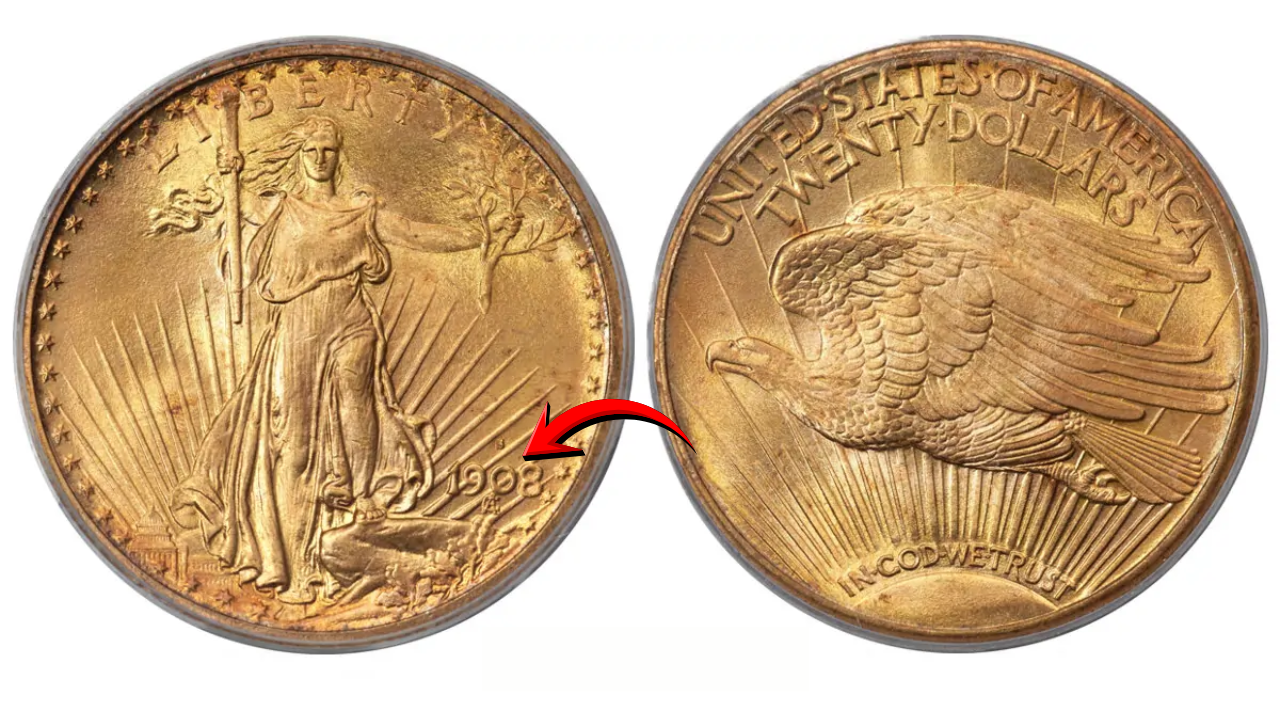
A single 1908-S Saint-Gaudens Double Eagle has captured the attention of the numismatic world by selling for an impressive $336,000 at a recent Heritage Auctions U.S. Coins Signature event. This remarkable result came from a multi-day sale that pushed the total auction realization past $8.7 million, underscoring how strong demand remains for top-quality rare coins in today’s market. The 1908-S piece, struck in San Francisco, stood out as the undisputed star among an already elite group of United States gold issues.
The coin’s price reflects more than just its gold content; it represents a fusion of rarity, condition, and historical importance that serious collectors are willing to pay a premium to own. At a time when investors are paying closer attention to tangible assets, the performance of this Double Eagle illustrates how exceptional examples of classic U.S. coinage continue to command substantial bids. Its success helped set the tone for an auction that saw multiple lots cross into six-figure territory and confirmed Heritage’s role as a leading marketplace for high-end coins.

Why the 1908-S Double Eagle Is So Special
The 1908-S Saint-Gaudens Double Eagle has long been recognized as a key date in the series, especially in higher Mint State grades. Minted in San Francisco during the early years of the Saint-Gaudens design, this issue had a relatively modest mintage compared with some later dates, and far fewer examples have survived in exceptional condition. The coin that realized $336,000 was graded MS67 by a major grading service and carried an additional quality endorsement, placing it among the finest known for the date and mintmark.
For advanced collectors building top-tier sets, these small differences in condition and eye appeal are crucial. Population reports show that only a tiny handful of 1908-S Double Eagles reach such lofty grades, and coins at this level rarely appear at public auction. When one does surface—especially from a named collection—it becomes a magnet for intense bidding. The final price reflects both the scarcity of similar pieces and the prestige attached to owning one of the very best examples in existence.
Inside the Heritage Auction: Key Numbers and Highlights
The sale that featured this standout coin was Heritage Auctions’ November U.S. Coins Signature event, which brought together a curated selection of rare and high-grade material. Over the course of the auction, total realizations exceeded $8.7 million, driven in large part by classic gold issues and early federal coinage. Multiple coins joined the 1908-S Double Eagle in achieving six-figure prices, confirming the depth of bidding across several advanced collections.
Below is a simplified snapshot of the sale’s top metrics and highlights:

| Auction metric or highlight | Detail from the Heritage sale |
|---|---|
| Headline coin | 1908-S Saint-Gaudens Double Eagle, top Mint State grade |
| Price realized for headline coin | $336,000 |
| Overall auction total | Just over $8.7 million in U.S. coins |
| Number of six-figure lots (approx.) | Several, led by rare double eagles and early gold |
| Auction venue | Heritage Auctions U.S. Coins Signature sale (November 2025) |
Other notable results included high-grade 1910-S and 1929 Double Eagles, an important 1795 “13 Leaves” Eagle, and a rare 1861-S Paquet Reverse $20, each bringing in strong five- or six-figure bids. Together, these coins demonstrated that demand is not limited to a single date or type but extends across the broader spectrum of classic United States gold.
The Appeal of Saint-Gaudens Double Eagles
The Saint-Gaudens Double Eagle design, introduced in 1907, is widely regarded as one of the most beautiful coin designs in American history. Sculptor Augustus Saint-Gaudens created a bold, high-relief image of Liberty striding forward with a torch and an olive branch, backed by a soaring eagle on the reverse. Collectors value these coins not only for their gold but also for their artistry, symbolism, and connection to the early 20th-century effort to elevate U.S. coin design.
Within that iconic series, the 1908-S occupies a special place. As an early San Francisco issue with limited surviving high-grade examples, it blends aesthetic appeal with genuine rarity. When a specimen appears in nearly pristine condition, with sharp details, original luster, and strong visual presence, it becomes the kind of trophy coin that can anchor an advanced collection. This combination of beauty and scarcity explains why the market responded so enthusiastically when the Heritage example crossed the block.

What These Prices Say About the Rare-Coin Market
The $336,000 result for the 1908-S Double Eagle fits into a larger pattern of strength at the upper end of the numismatic market. While everyday coins and lower-grade material can experience ups and downs, coins that check all the boxes—scarce, historically important, and superbly preserved—tend to hold value well and often set new records over time. Competitive bidding at the Heritage sale suggests that collectors and investors continue to view such coins as desirable long-term holdings.
Another trend highlighted by this auction is the importance of third-party grading and certification. High-end buyers increasingly demand coins that have been authenticated, graded, and sometimes recognized for above-average quality within their grade. A top-grade, certified 1908-S Double Eagle with strong eye appeal stands out in any catalog, encouraging confidence among bidders who may only ever see photographs before placing a substantial bid.
Lessons for Collectors and Investors
For collectors, the 1908-S Double Eagle’s performance reinforces the value of focusing on quality rather than sheer quantity. A smaller collection built around carefully chosen, high-grade coins can ultimately prove more rewarding—both emotionally and financially—than a large group of average pieces. Key dates in popular series, especially those with limited high-grade populations, are often the coins that shine brightest when they come to auction.
For investors looking at rare coins as part of a diversified portfolio, this sale is a reminder that the market rewards knowledge, patience, and selectivity. Not every gold coin will bring a headline price, but coins with strong fundamentals and a clear track record of demand can offer a measure of stability in a world where paper assets and currencies fluctuate. Working with reputable auction houses, dealers, and grading services is essential to identifying the pieces that genuinely belong in that category.
SOURCE
FAQs
Q1: Why did this particular 1908-S Double Eagle sell for so much?
A1: It combined a rare date and mintmark with a top Mint State grade and exceptional eye appeal, making it one of the finest known examples.
Q2: Does the $336,000 price reflect only gold value?
A2: No, most of the value comes from rarity, condition, and collector demand, not just the underlying gold content.
Q3: What does the $8.7 million auction total tell us?
A3: It shows that the high-end rare-coin market remains strong, especially for important U.S. gold issues in outstanding condition.