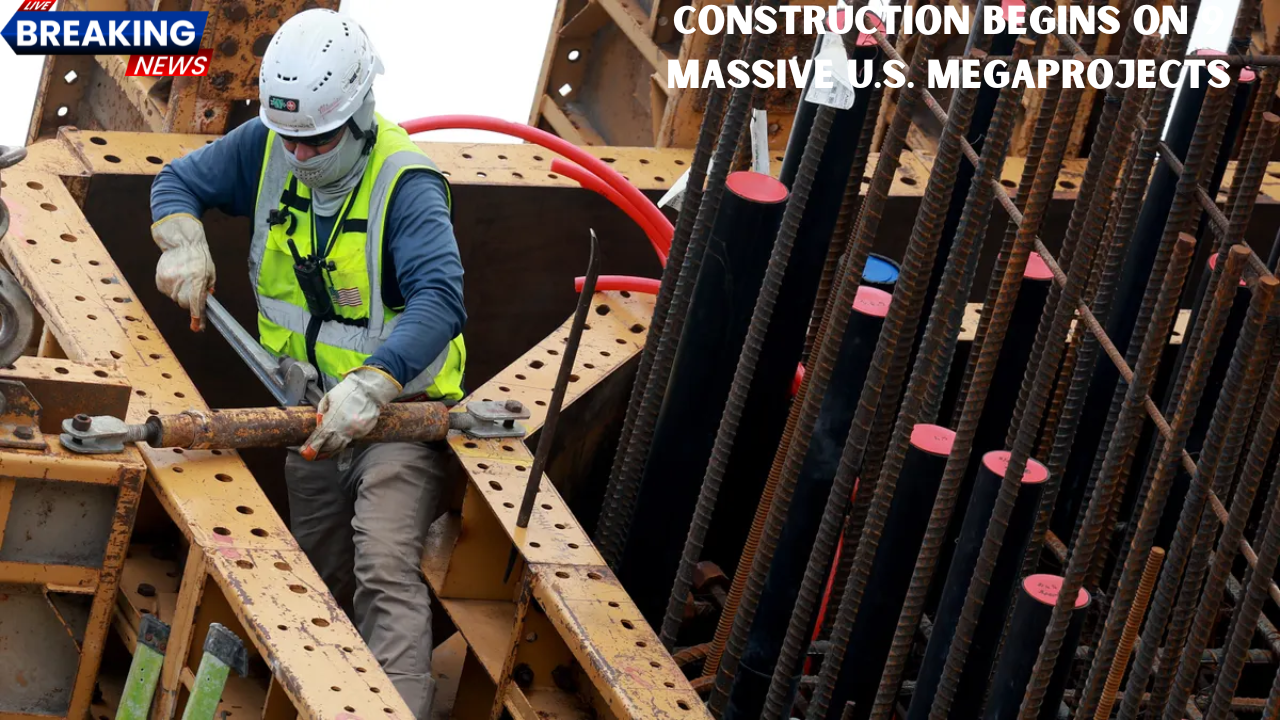
Construction is beginning on nine massive U.S. megaprojects that highlight how energy, transportation, and high-tech investment are reshaping the country’s economic future. These new builds, each worth hundreds of millions or even billions of dollars, reflect strong demand for liquefied natural gas, data capacity, and modern infrastructure even as overall construction growth shows signs of slowing.
LNG megaprojects on the Gulf Coast
Several of the largest projects now breaking ground are liquefied natural gas (LNG) terminals and related facilities along the Gulf Coast, designed to expand America’s role as a global energy exporter. These plants liquefy natural gas for shipment overseas, requiring huge investments in storage tanks, pipelines, compressors, and marine loading berths.

In Louisiana and Texas, multibillion-dollar phases of projects such as Rio Grande LNG, Calcasieu Pass–related facilities, and major new LNG export terminals near Sulphur and Corpus Christi represent some of the highest-value construction starts in the nation. Together, these developments are expected to support thousands of construction jobs, long-term operations roles, and local tax revenue while also raising debates about emissions and long-term fossil fuel demand.
High-tech and data center investments
Another standout among the nine megaprojects is a massive hyperscale data center described as the Meta Hyperion Data Centre in Richland, Louisiana, signaling Big Tech’s continuing race to build server capacity for cloud computing and artificial intelligence. Data centers of this scale require advanced cooling systems, robust power supplies, and strong grid connections, often partnering with utilities and renewable energy providers to manage enormous electricity demand.

Similar large-scale technology and manufacturing sites, including pharmaceutical and advanced manufacturing facilities such as a new Eli Lilly plant in Indiana, reflect broader efforts to secure critical supply chains inside the United States. These projects tend to bring highly skilled jobs, from engineers and technicians to construction managers, and can become long-term anchors for regional innovation clusters.
Transportation tunnels and urban connectivity
Transportation infrastructure also features prominently in the current wave of megaprojects, with one of the most notable being the Frederick Douglass Tunnel improvement program in Maryland. This multibillion-dollar rail tunnel initiative is designed to replace aging infrastructure on a key segment of the Northeast Corridor, improving reliability and travel times on one of the busiest passenger rail routes in the country.

Large federal and state-backed rail and transit efforts, such as the Hudson Tunnel elements of the Gateway Program and ongoing high-speed and regional rail expansions, form the broader context for these tunnel works. By modernizing bottleneck segments, these projects aim to reduce delays, increase capacity, and support long-term economic growth in dense metropolitan regions.
Snapshot of selected new megaprojects
| Project / facility | Sector | Approximate value (USD) | Location |
|---|---|---|---|
| Rio Grande LNG Phase 2 | Energy (LNG) | About 9 billion | Brownsville, Texas |
| Calcasieu Pass–related LNG terminal | Energy (LNG) | Around 10+ billion range | Cameron area, Louisiana |
| Woodside Louisiana LNG facility | Energy (LNG) | 5.1 billion | Sulphur, Louisiana |
| Corpus Christi LNG expansion | Energy (LNG) | 2.9 billion | Gregory, Texas |
| Meta Hyperion Data Centre | Technology / Data | 7.5 billion | Richland, Louisiana |
| Frederick Douglass Tunnel improvements | Rail transport | 5.9 billion | Maryland |
| Eli Lilly manufacturing facility | Manufacturing | 1.7 billion | Lebanon, Indiana |
Economic signals from megaproject starts
These nine megaprojects are launching at a time when overall nonresidential construction starts have grown modestly, even as some categories like warehouses and certain manufacturing projects have cooled. Analysts note that very large projects are providing an outsized share of the momentum, helping keep total construction spending elevated despite softer signs elsewhere in the economy.

For local and regional labor markets, megaprojects can tighten demand for skilled trades such as electricians, welders, heavy equipment operators, and project managers, often pushing wages higher and intensifying competition among contractors. This environment encourages workforce training initiatives, apprenticeship expansion, and new partnerships between industry and technical schools to ensure enough qualified workers are available.
Environmental and community considerations
Large LNG terminals and energy projects bring complex environmental reviews, often focused on greenhouse gas emissions, impacts on wetlands and coastlines, and risks from storms and sea-level rise along the Gulf Coast. Developers typically commit to mitigation measures such as habitat restoration, air quality controls, and investments in community programs, although critics argue that long-lived fossil infrastructure may slow the transition to cleaner energy.
Data centers and manufacturing plants raise their own concerns about water use, land consumption, and electricity demand, which can strain local grids if not carefully planned. Many recent projects therefore emphasize energy efficiency, on-site solar or storage, and long-term power purchase agreements with renewable providers to balance economic goals with sustainability.
How these megaprojects reshape regions
Once complete, the new tunnels, rail and port connections, energy export terminals, and high-tech campuses are expected to reshape trade routes, commuter patterns, and regional job markets for decades. Improved rail infrastructure can reduce congestion on highways and support denser, transit-oriented development, while expanded port and LNG capacity can shift the U.S. position in global commodity flows.
At the same time, tech and manufacturing megaprojects in smaller cities and rural areas can diversify local economies that previously relied on agriculture or traditional industry, creating new clusters around data, life sciences, or advanced materials. The combined effect of these nine new megaprojects signals a continued long-term bet on U.S. infrastructure, energy, and innovation, even amid near-term economic uncertainty.
SOURCE
FAQs
Q1: What qualifies these as “megaprojects”?
They each carry price tags near or above 1 billion dollars, attract significant public attention, and are expected to have long-term impacts on regional economies and infrastructure.
Q2: Which sectors dominate the new megaprojects?
Energy export facilities, especially LNG, lead the list, followed by data centers, advanced manufacturing, and major rail infrastructure improvements.
Q3: How long will these projects take to finish?
Most are multi-year efforts, with construction timelines that typically range from several years for factories and data centers to a decade or more for complex rail and tunnel works.